Thinking About Taking Down a Tree? Read This First.
Look, sometimes a tree just has to go. Maybe it's dead, diseased, or growing too close to your house. Whatever the reason, tree removal isn't something you should jump into without a plan. As a local tree service owner here in Whittier, I've seen it all – good jobs, bad jobs, and some downright dangerous situations. My goal here is to give you the straight scoop on what you need to know before you even think about grabbing a chainsaw.
First off, let's talk permits. You might be surprised, but in some cases, you actually need a permit from the city to remove a tree, especially if it's a large one or a protected species. Don't skip this step. The last thing you want is a fine or to have to replant a tree you just paid to remove. Check with the City of Whittier's planning department. It's a quick call that can save you a lot of headaches.
Next, consider the tree itself. How big is it? What kind of tree is it? Is it leaning? Is it near power lines, your house, or your neighbor's fence? These are all huge factors. A small, young tree in an open area is one thing. A mature sycamore towering over your roof in a tight Uptown Whittier lot? That's a whole different ballgame.
When You Can (Maybe) Do It Yourself
Alright, so you've done your homework on permits and assessed the tree. When can you realistically tackle this yourself? Generally, I'd say if the tree is:
- Small enough that you can safely cut it with a hand saw or small electric chainsaw from the ground.
- Far away from any structures, power lines, or anything that could be damaged if it falls unexpectedly.
- Not leaning heavily in any direction, and you can predict its fall path with 100% certainty.
- Not diseased or rotten to the point where it's structurally unstable.
Even then, wear proper safety gear: gloves, eye protection, a hard hat, and sturdy boots. Make sure no one else is in the fall zone. This isn't a job for flip-flops and a t-shirt. If you're using a chainsaw, know how to use it safely. Kickback is real, and it's dangerous.
When to Call a Professional (Like Us at Oasis Tree)
This is where most homeowners should be honest with themselves. If there's *any* doubt in your mind, call a pro. Seriously. Here's when it's absolutely, positively time to pick up the phone:
- Any tree near power lines: This isn't just dangerous; it can be lethal. Utility companies often have specific rules about working near their lines.
- Large trees: Anything that requires climbing, heavy equipment, or precise rigging to bring down safely. These trees have immense weight and can cause catastrophic damage if they fall wrong.
- Trees that are diseased, dead, or rotting: These are unpredictable. They can break apart unexpectedly, and their structural integrity is compromised.
- Trees in tight spaces: If it's close to your house, your neighbor's house, a fence, or other valuable property, you need someone who knows how to control the fall.
- Trees with significant lean: Gravity is a powerful force. If a tree is already leaning, it's telling you where it wants to go. Controlling that fall takes expertise.
- If you're not comfortable or don't have the right equipment: Don't risk your health or your home to save a few bucks.
Professional tree removal companies, like Oasis Tree, have the training, insurance, and specialized equipment (cranes, lifts, rigging gear) to do the job safely and efficiently. We know how to assess the tree, plan the removal, and execute it without damaging your property or putting anyone at risk. Plus, we'll usually handle the cleanup, which is a huge bonus.
After the Tree is Down: What's Next?
So, the tree's gone. Now what? You've got a few options for the leftover wood and the stump.
- Wood: If you're handy and have a fireplace, you might want to cut it into firewood. Otherwise, most tree services will haul it away. Some even chip it on site, leaving you with mulch.
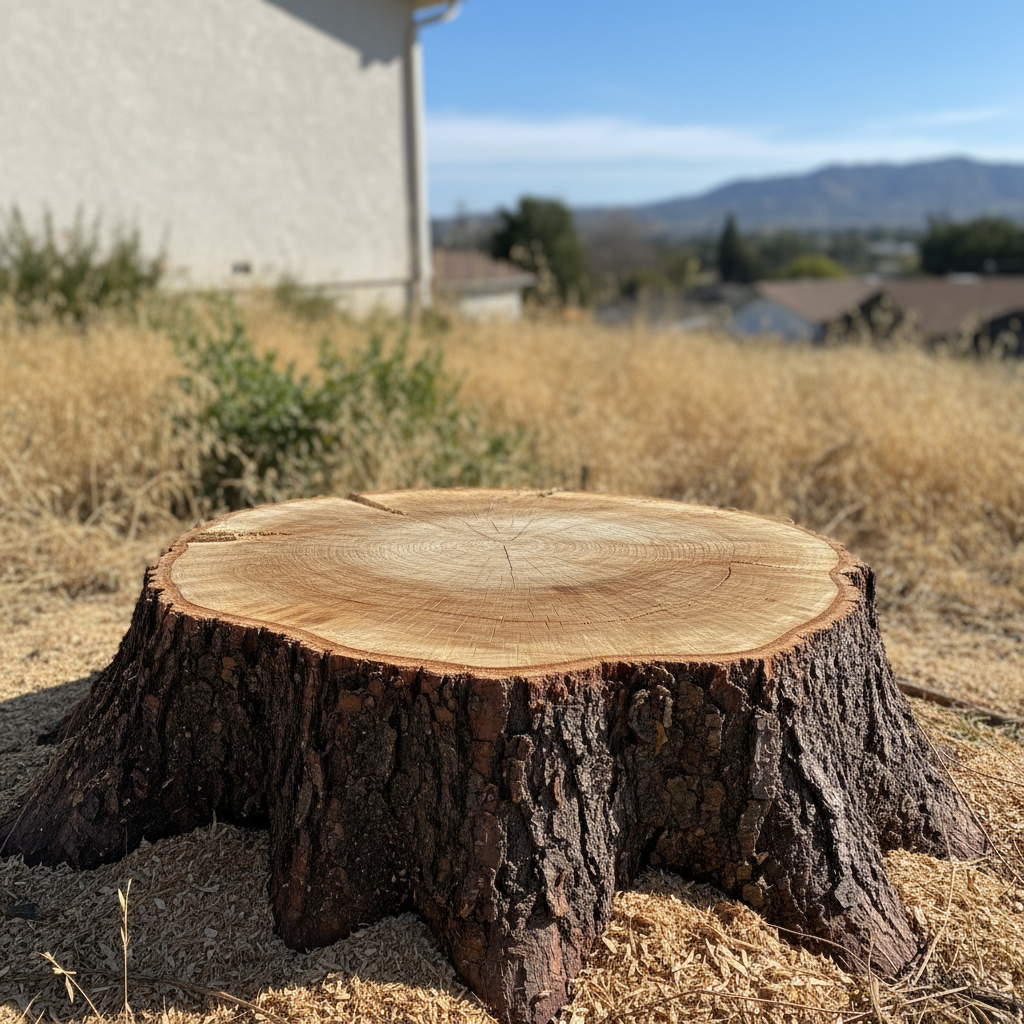
- Stump: You can leave it, but it can be an eyesore, a tripping hazard, and attract pests. Most folks opt for stump grinding. This involves a machine that grinds the stump down below ground level, allowing you to plant grass or new landscaping over it. You can rent a grinder, but they're heavy, powerful machines, and it's another job often best left to the pros.
No matter what, make sure the area is clear of debris. You don't want any leftover branches or wood chips creating hazards or attracting termites.
Taking down a tree is a big decision and a serious job. Be smart, be safe, and know your limits. Your property and your well-being are worth it.