Do I really need to prune my trees every year?
That's a common question, and the short answer is: probably not. Most mature trees, especially native ones like our California sycamores or even many of the fruit trees folks have in their backyards around Friendly Hills, don't need annual pruning. Think about it, in nature, nobody's out there with a pole saw every spring. What trees usually need is structural pruning when they're young to guide their growth, and then maintenance pruning every 3-5 years once they're established. This maintenance is mostly about removing dead, diseased, or crossing branches, and sometimes thinning the canopy to improve air circulation or light penetration. Over-pruning can actually stress a tree, making it more susceptible to pests and diseases. So, don't feel like you're neglecting your trees if you're not out there with the pruners every twelve months. Focus on quality over frequency.
What's the deal with 'thinning' versus 'reduction' pruning?
Good question, because these terms get thrown around, and they're not the same thing. When we talk about thinning, we're selectively removing branches from the interior of the tree's canopy. The goal here is to improve air movement, let more sunlight reach the inner branches and the ground below, and reduce the overall weight without changing the tree's size or shape too much. You're trying to create a more open, natural look. It's like letting a little breeze through. Reduction pruning, on the other hand, is about reducing the overall size of the tree or specific limbs. We do this by cutting back larger branches to smaller lateral branches. This is often done to keep a tree away from a house, power lines, or to manage its size in a smaller yard. The key is to cut back to a branch that's at least one-third the diameter of the branch you're removing. This helps the tree seal the wound properly and avoids those ugly, unhealthy stubs you see with 'topping.' Reduction is more aggressive than thinning, and it needs to be done carefully to maintain the tree's health and natural form.
Can pruning actually make my tree sick or weaker?
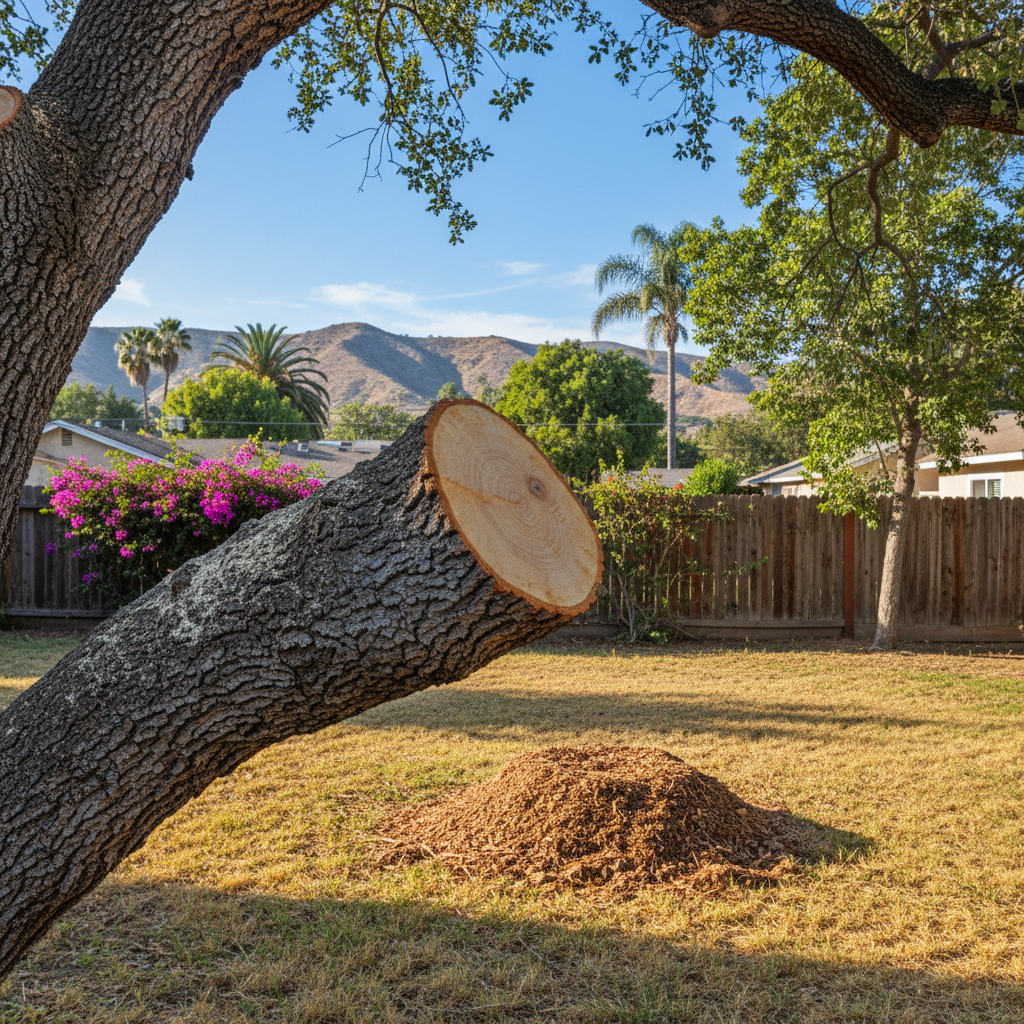
Absolutely, it can. Bad pruning is often worse than no pruning at all. When you prune incorrectly – like topping a tree, leaving stubs, making flush cuts, or removing too much live wood at once – you're essentially creating open wounds that the tree struggles to heal. These wounds are entry points for pests, fungi, and diseases. Topping, for instance, triggers a flush of weak, upright growth called 'water sprouts' that are poorly attached and prone to breaking in high winds, which we definitely get here in Whittier. Removing more than 25% of a tree's live canopy in a single pruning cycle can also put immense stress on it, weakening its defenses and potentially shortening its lifespan. It's like having major surgery; your body needs time to recover. So, yes, if not done right, pruning can definitely make your tree sick or weaker. That's why knowing what you're doing, or hiring someone who does, is so important.
My tree is growing into the power lines. Can I just trim it myself?
Hold on a second there. This is one of those situations where DIY can be incredibly dangerous. Power lines are no joke. Even if you think the lines are insulated, they can still carry thousands of volts, and a small mistake can be fatal. Utility companies have specific regulations and trained crews for managing vegetation around power lines for a reason. In Whittier, you'll often see Southern California Edison (SCE) crews out doing this work. If your tree is anywhere near power lines, your first call should be to your utility company. They might prune it themselves, or they'll advise you on how to proceed safely. Don't risk your life or causing a major power outage. This isn't the place to save a few bucks by doing it yourself.
How do I know if a tree service is legitimate and qualified?
That's a smart question, because there are a lot of folks with a chainsaw and a truck out there. First off, always ask for proof of insurance – specifically liability insurance and workers' compensation. If they don't have it, or hesitate, walk away. You don't want to be on the hook if they damage your property or someone gets hurt. Second, look for certifications. An arborist certified by the International Society of Arboriculture (ISA) has demonstrated a certain level of knowledge and experience. Oasis Tree has certified arborists on staff, and we're proud of that. Third, ask for references or check online reviews. See what other homeowners in Whittier are saying about their work. A legitimate company will be happy to provide these things. And finally, get a written estimate that clearly outlines the scope of work, what they'll prune, how they'll clean up, and the total cost. Don't just go with the cheapest bid; sometimes, that's the most expensive mistake you can make in the long run.
What's the best time of year to prune my trees in Southern California?
Generally, for most deciduous trees (the ones that lose their leaves), the dormant season – late fall to early spring, when they don't have leaves – is ideal. It's easier to see the tree's structure, and the tree is less stressed because it's not actively growing. For evergreen trees, you can often prune them any time of year, but avoiding the hottest summer months or periods of extreme drought is a good idea, as pruning can stress them. There are exceptions, of course. For instance, some fruit trees are pruned at specific times to encourage fruit production, and trees that bloom in spring should often be pruned right after they finish flowering so you don't cut off next year's blooms. If you're dealing with dead or hazardous branches, those can and should be removed any time of year for safety. It really depends on the species and the goal of the pruning, but if you're ever unsure, it's worth getting an arborist's opinion.