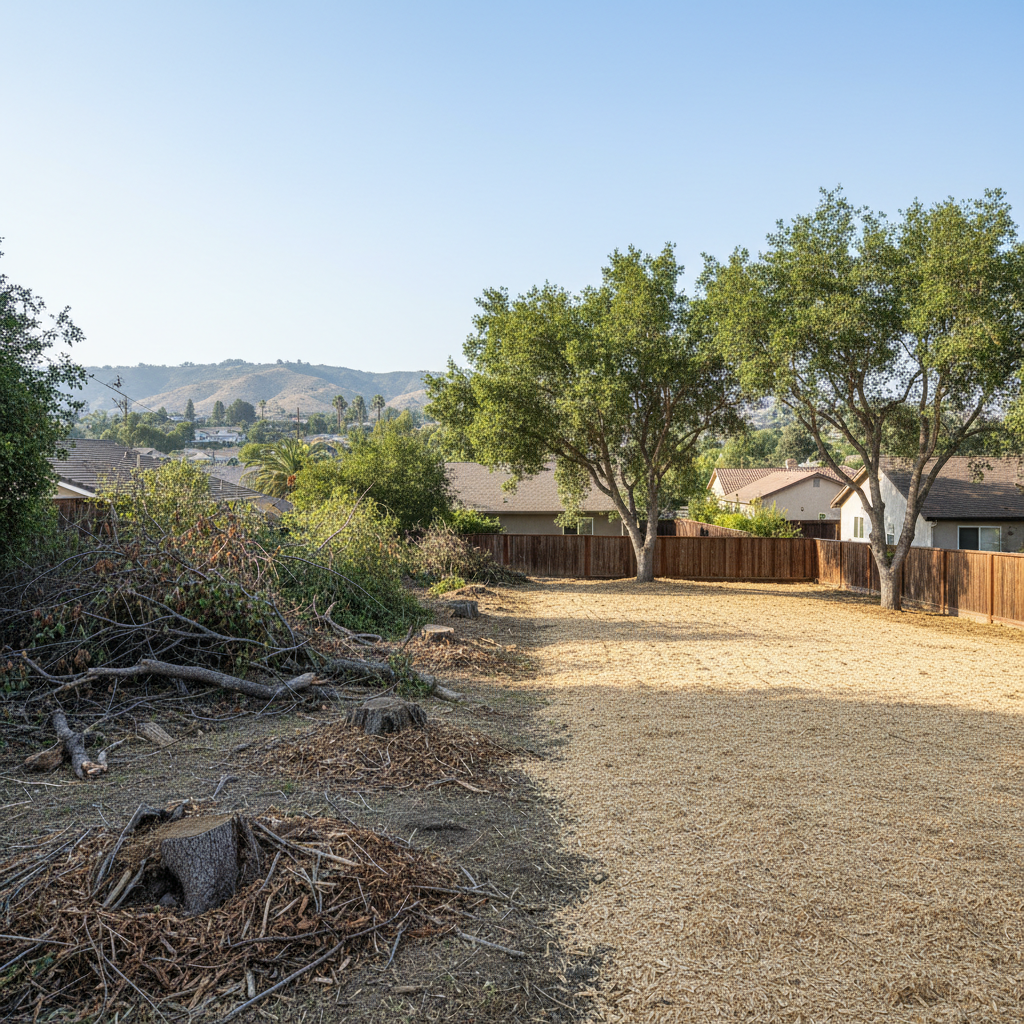
Got a piece of land that's gotten a little wild? Maybe you're prepping for a new build, or just want to reclaim some usable space. Lot clearing isn't a one-size-fits-all job, and you've basically got two main routes: doing it by hand, or bringing in the machines. As someone who's seen both sides of this coin countless times around Whittier, I can tell you there are real differences in what you get.
Manual Lot Clearing: The Sweat Equity Approach
When I talk about manual clearing, I'm talking about axes, chainsaws, loppers, shovels, and a whole lot of elbow grease. This is the traditional way, and it's still got its place. You're cutting down trees, hacking away at brush, digging out stumps, and then hauling all that debris away, usually by hand or with a small trailer.
Pros of Manual Clearing:
- Precision: You can be super selective about what stays and what goes. If you've got specific plants you want to preserve, or you're working around existing structures, manual clearing gives you that fine control.
- Less Ground Disturbance: No heavy machinery means less compaction of your soil. This is a big deal if you're planning on planting new things right away, or if your soil is already delicate. Think about those older homes in the Friendly Hills area with established gardens – you don't want a skid steer tearing up roots you want to keep.
- Lower Upfront Equipment Cost: If you're doing it yourself, you might already own most of the tools. If you hire someone, their equipment costs are generally lower, which can sometimes translate to a lower hourly rate.
Cons of Manual Clearing:
- Time and Labor Intensive: This is the big one. It takes forever, especially on larger lots or with dense growth. You'll be sore, tired, and it'll eat up your weekends for months.
- Physical Demands: It's hard work. Plain and simple.
- Disposal Can Be a Headache: Once you've cut everything down, you still have to get rid of it. Hauling truckload after truckload to a green waste facility can add up in time and dump fees.
- Stump Removal is Tough: Grinding or digging out stumps manually is brutal. Many folks just cut them flush, which means they can sprout back or become tripping hazards.
Mechanical Lot Clearing: Bringing in the Big Guns
This approach involves machinery like skid steers, excavators, forestry mulchers, and chippers. These machines are designed to clear land quickly and efficiently, often turning vegetation into mulch right on site.
Pros of Mechanical Clearing:
- Speed and Efficiency: This is where machines shine. What takes a crew of people weeks can often be done in a few days. If you're on a deadline for a project, this is your best bet.
- Thorough Stump Removal: Mulchers can grind stumps down to below grade, and excavators can pull them right out, leaving a clean slate.
- On-Site Debris Management: Forestry mulchers turn trees and brush into a fine layer of mulch, which can be left on site to enrich the soil and prevent erosion. This is a huge advantage, especially with our dry Whittier summers; that mulch helps retain moisture. It cuts down on hauling costs dramatically.
- Handles Dense Growth: If you've got thick chaparral or a heavily overgrown area, machines can power through it much more easily than a person with a chainsaw.
Cons of Mechanical Clearing:
- Higher Upfront Cost: Renting these machines or hiring a service with them is more expensive than basic manual labor.
- Less Precision: While skilled operators can be very precise, machines are generally less selective than a human with hand tools. You might lose some desirable plants unless they're clearly marked and protected.
- Ground Disturbance: Heavy equipment compacts soil. If you're not careful, it can damage root systems of nearby trees you want to keep. It can also leave ruts, especially if the ground is wet.
- Permit Requirements: Depending on the size and scope, you might need specific permits from the city for certain types of mechanical clearing, especially if it involves significant grading or tree removal.
My Recommendation for Whittier Homeowners
For most homeowners in Whittier looking to clear a significant area, I lean towards mechanical clearing, especially with a forestry mulcher. Here's why:
First, the sheer efficiency is tough to beat. Time is money, and you'll save a ton of both by letting machines do the heavy lifting. Second, the on-site mulching aspect is a game-changer. You don't have to worry about hauling away tons of green waste, which is a huge cost and logistical headache. That mulch then benefits your soil, helping with moisture retention and reducing weeds – something we all appreciate in our hot California climate.
Now, if you're just tidying up a small corner of your yard, or you have a very specific, delicate landscape you're working around, manual clearing might make sense. But for anything beyond that, especially if you're dealing with larger trees or dense underbrush, mechanical clearing is usually the smarter, more effective, and ultimately more durable solution. It leaves you with a much cleaner, more usable space, ready for whatever you've got planned next.
Whatever you decide, make sure you're working with pros who understand the local regulations and soil conditions. We've done plenty of both kinds of jobs at Oasis Tree, and we can help you figure out the best approach for your specific property.